Cleaner Water at Home: Understanding Filtration, Water Softening, and Reverse Osmosis
Have you ever poured yourself a glass of tap water, taken a sip, and noticed something slightly off about the taste? Or perhaps you’ve spent half your Saturday scrubbing stubborn…
Have you ever poured yourself a glass of tap water, taken a sip, and noticed something slightly off about the taste? Or perhaps you’ve spent half your Saturday scrubbing stubborn white deposits from the bathroom faucet, wondering why they keep coming back.
Water quality affects everyday life in ways we don’t always recognize. From the taste of morning coffee to the condition of household appliances, the water flowing through your home plays a surprisingly important role.
Fortunately, modern water treatment technology offers several practical ways to address common concerns. The challenge isn’t necessarily finding equipment. It’s figuring out which solution your household actually needs without spending money on unnecessary upgrades.
Understanding the Importance of Water Filtration
Water can collect various substances as it travels through soil, underground formations, and distribution pipes. Depending on its source, it may contain suspended particles, dissolved minerals, or substances that influence taste and odor.
An effective approach to filtration & purification begins with identifying these concerns and selecting technology designed to address them.
Sediment filters, for example, capture suspended particles such as sand and rust. Activated carbon filters can help reduce chlorine taste, certain odors, and specific organic compounds.
More specialized treatment may be necessary when testing identifies potentially harmful contaminants.
It’s important to remember that clear-looking water isn’t automatically safe to drink. Some contaminants have no noticeable taste, color, or smell.
Appropriate water testing provides a much better foundation for treatment decisions than appearances alone.
Why Hard Water Creates So Many Household Frustrations
Hard water is a familiar problem in many households. Those chalky deposits around showerheads, cloudy drinking glasses, and mineral marks on stainless steel sinks are often evidence of excessive hardness.
Properly selected water softener systems help reduce calcium and magnesium through an ion exchange process, making household water less likely to leave behind certain mineral deposits.
Softer water can improve soap lathering and reduce some of the cleaning effort associated with hard water.
It may also help limit future scale accumulation inside water heaters, dishwashers, and other connected appliances.
However, a softener isn’t a substitute for dedicated drinking water treatment. Its primary purpose is managing mineral hardness rather than removing every potentially unwanted substance.
Before purchasing equipment, consider your household’s water hardness, daily consumption, and available installation space.
A Better Approach to Drinking Water at Home
Buying bottled water every week can become expensive, not to mention inconvenient when you’re carrying heavy packages from the grocery store.
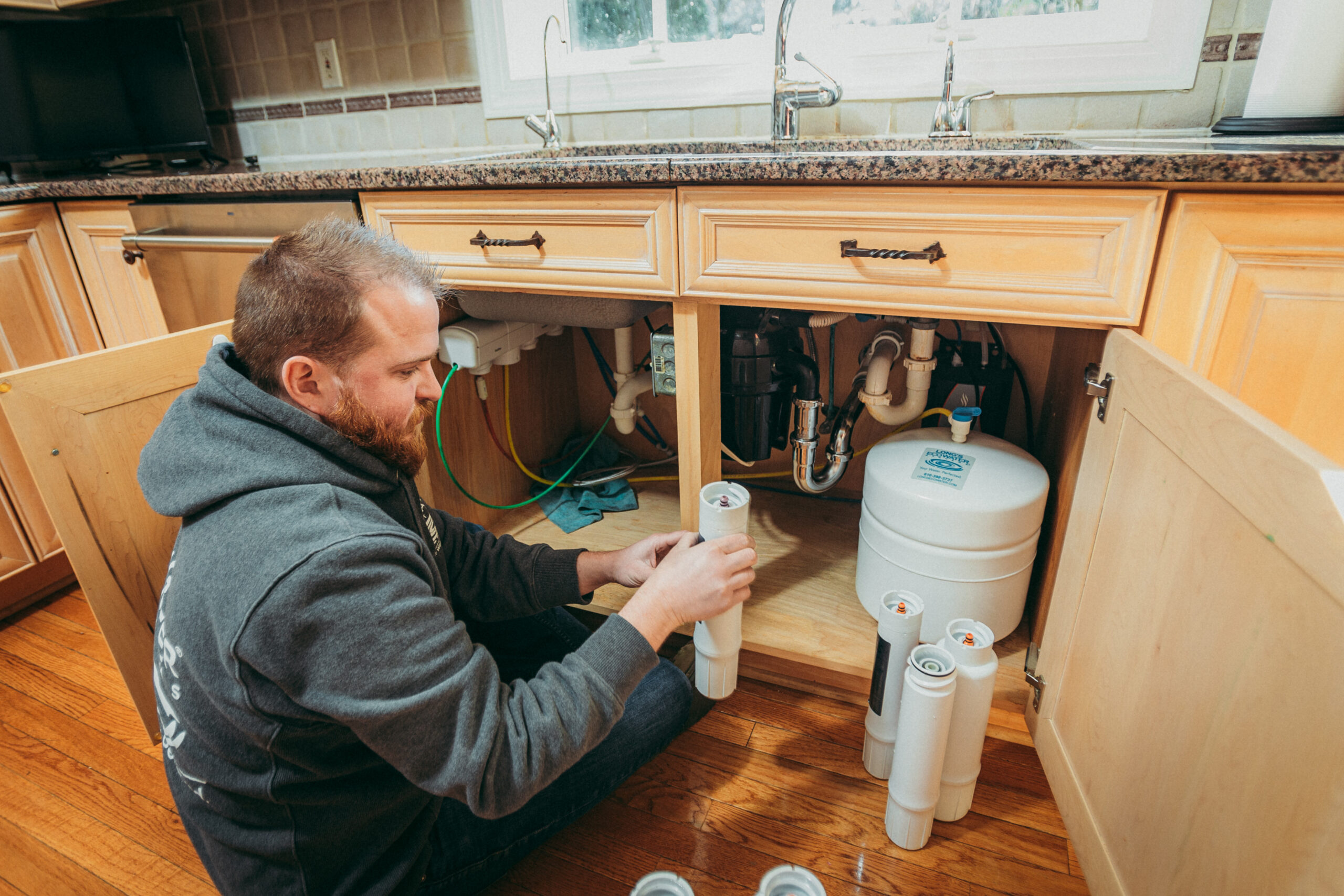
For households exploring alternatives, reverse osmosis drinking water equipment can provide a convenient source of treated water directly from a dedicated kitchen faucet.
The technology uses water pressure and a semipermeable membrane to separate water from many dissolved substances. Additional filtration stages may address sediment and certain taste-related concerns.
Depending on their verified performance, these units can reduce specific contaminants such as lead, nitrates, and dissolved salts.
Many residential models fit beneath the kitchen sink, making them suitable for households with limited space.
Regular filter and membrane replacement is essential, though. Even when the water continues tasting pleasant, treatment components may require servicing to maintain their intended performance.
Should You Treat Every Faucet or Just Your Kitchen Supply?
This question often comes up when homeowners begin exploring treatment options.
Whole-house equipment treats incoming water before it reaches connected fixtures and appliances. It’s particularly useful when a problem affects multiple areas of the property, such as excessive mineral hardness or sediment.
Point-of-use equipment focuses on specific locations, typically the kitchen sink.
If your main concern involves drinking water, treating every gallon used for laundry, bathing, and cleaning might not be necessary.
On the other hand, installing a small kitchen filter won’t resolve mineral deposits throughout your bathroom.
Some households benefit from combining both approaches. The decision should reflect actual water conditions, household priorities, and available budget.
Water Testing Can Save You From Expensive Guesswork
Walking into a showroom filled with impressive treatment equipment can feel a little overwhelming.
Every product seems to promise something different, and it’s not always obvious which features are genuinely useful.
Start with reliable water testing. Understanding hardness levels, water source characteristics, and specific contamination concerns helps narrow down your choices.
Homeowners using private wells should pay particular attention to appropriate laboratory testing, since water quality can change over time.
Those receiving municipal water may find their supplier’s water quality reports helpful.
Ask treatment specialists to explain their recommendations based on measurable results rather than general assumptions.
A little investigation beforehand could prevent you from purchasing equipment that solves the wrong problem.
Keeping Your Water Treatment Equipment Working Properly
Installing treatment equipment is only the beginning. Like most household appliances, these systems require occasional attention.
Filters need replacing, traditional softeners generally require regeneration salt, and membrane-based equipment needs periodic maintenance.
Check manufacturer recommendations and keep a record of servicing dates.
It’s also worth considering maintenance expenses before making a purchase. Replacement cartridges, water consumption during treatment, and professional servicing can all influence long-term ownership costs.
A well-maintained system is more likely to deliver consistent results than expensive equipment that’s largely forgotten after installation.
Making Better Water a Natural Part of Everyday Life
Improving household water quality doesn’t need to be complicated. Begin by understanding what’s in your water, identify the issues that matter most, and select appropriate treatment equipment.
Perhaps you’ll enjoy better-tasting coffee, spend less time scrubbing mineral deposits, or simply appreciate the convenience of treated drinking water at home.
These aren’t necessarily dramatic changes, but they can make everyday routines noticeably more pleasant.
And considering how often we use water throughout the day, investing in suitable treatment and consistent maintenance is a practical improvement that can continue delivering value for years.