Understanding Hard Water and Choosing the Right Treatment for Your Home
Water is one of those everyday essentials we rarely think about until it starts causing trouble. Perhaps your bathroom faucets develop white marks, your glassware looks cloudy straight out of…
Water is one of those everyday essentials we rarely think about until it starts causing trouble. Perhaps your bathroom faucets develop white marks, your glassware looks cloudy straight out of the dishwasher, or your favorite soap doesn’t seem to lather as well as it used to. These little frustrations may seem unrelated, but they can sometimes point to the same issue: the mineral content of your water.
Water quality affects more than taste and appearance. It can influence plumbing, household appliances, cleaning routines, and the overall comfort of daily life. The good news is that once you understand what’s happening, finding a practical solution becomes much easier. You don’t necessarily need an expensive system or a complicated setup. You need to know what your water contains and which treatment method suits your needs.
What Is Hard Water, and Why Does It Matter?
Hard water contains elevated levels of dissolved minerals, mainly calcium and magnesium. These minerals naturally enter groundwater as it moves through soil and rock. The amount varies from one location to another, which explains why one household may have persistent scale buildup while a neighboring property experiences very few problems.
Hard water isn’t automatically unsafe to drink. Calcium and magnesium are naturally occurring minerals, and their presence alone doesn’t mean water is contaminated. However, higher hardness levels can create practical challenges around the home.
One of the most familiar signs is a chalky residue on faucets, shower doors, and kitchen sinks. This happens when water evaporates and leaves mineral deposits behind. You might also notice that towels feel stiff after washing, soap leaves a film on surfaces, or your kettle develops a crust inside.
Heating water can make the problem more noticeable. Minerals may accumulate on heating elements and other components, potentially reducing efficiency or increasing maintenance needs. The effect depends on the hardness level, water temperature, equipment design, and how frequently the appliance is used.
Rather than judging water quality by appearance alone, consider testing it. A water hardness test can provide a clearer picture and help determine whether treatment is worth considering.
How Hard Water Affects Everyday Household Tasks
The impact of mineral-rich water often shows up in small ways that gradually become annoying. Cleaning the shower takes longer because spots return soon after scrubbing. Glasses appear dull even after a complete dishwasher cycle. Soap scum builds up around the bathtub, and laundry may not feel as soft as expected.
These problems occur partly because minerals can interact with soaps and detergents, making cleaning less effective under certain conditions. People sometimes respond by using more detergent or stronger cleaning products, but that doesn’t always solve the underlying issue.
Appliances can be affected as well. Dishwashers, washing machines, kettles, and water heaters all have different operating conditions, yet many can experience mineral buildup when exposed to sufficiently hard water. Regular descaling and following manufacturer recommendations can help, though ongoing deposits may continue if the water remains unchanged.
There is also the question of time. Nobody wants to spend every weekend scrubbing mineral marks from taps or trying different products to get towels feeling comfortable again. For some households, reducing hardness can make routine cleaning noticeably easier.
Still, it’s worth separating inconvenience from health concerns. Scale on a faucet is a maintenance issue, not proof that the water is dangerous. If you’re worried about drinking-water safety, test for the relevant contaminants rather than relying on hardness as an indicator.
How Water Softeners Work
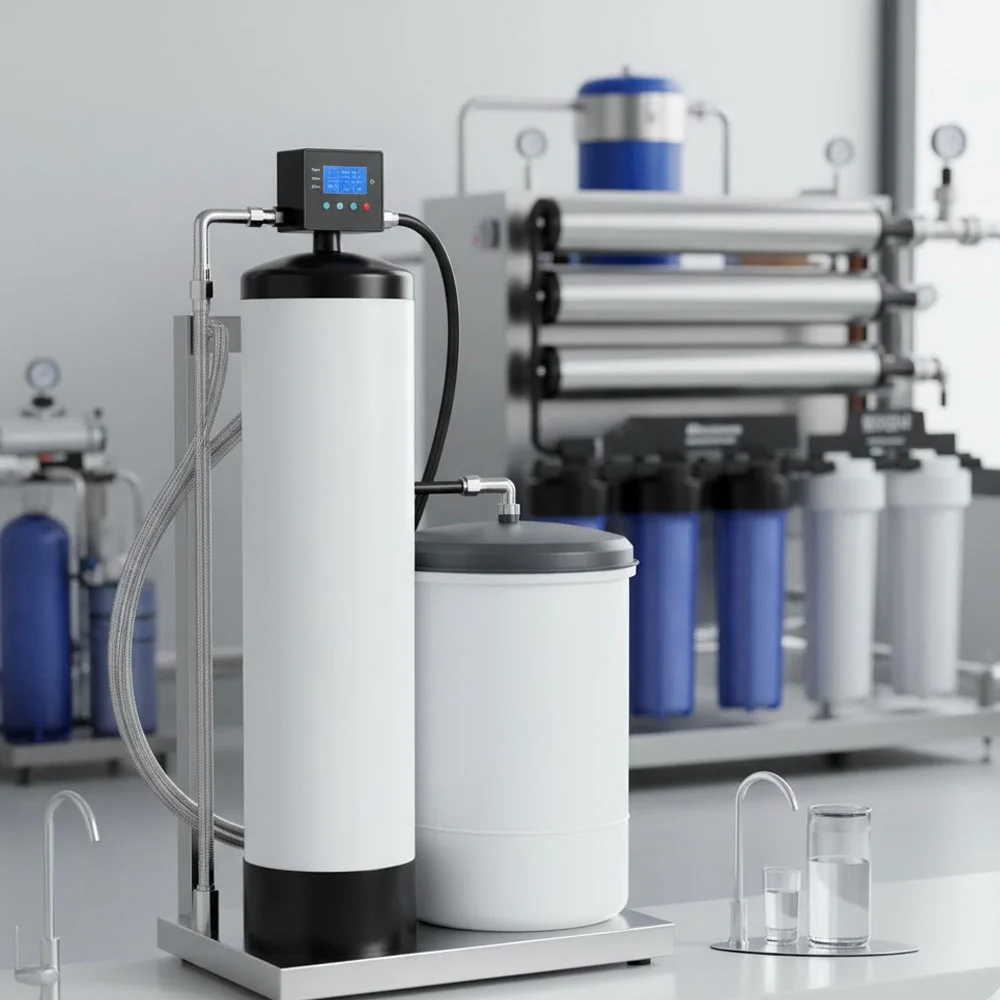
When testing confirms that hardness is causing persistent problems, water softeners may be a suitable option. Traditional ion-exchange softeners work by passing water through a resin that captures calcium and magnesium ions and exchanges them for other ions, usually sodium.
As water flows through the system, the resin gradually becomes saturated with hardness minerals. The unit then regenerates the resin, typically using a salt solution, so it can continue working. Depending on the model, regeneration may be controlled by a timer, water usage, or measured demand.
A properly sized softener can reduce mineral scale in plumbing and appliances, improve soap performance, and make cleaning easier. Many homeowners notice fewer spots on fixtures and less buildup in kettles and showerheads.
However, a softener isn’t the answer to every water problem. It doesn’t automatically remove bacteria, pesticides, or all dissolved contaminants. Its primary job is reducing hardness, so additional treatment may be necessary if testing identifies other concerns.
There are also practical considerations. Salt-based systems require periodic replenishment and maintenance, and regeneration can use water. Since conventional softening adds some sodium to the treated water, households with specific dietary or medical concerns should discuss drinking-water options with an appropriate professional. Alternatives may be available depending on the application.
The best system is one that matches the home’s water hardness, daily consumption, plumbing arrangement, and maintenance preferences.
When Reverse Osmosis May Be a Better Choice
Softening and drinking-water purification serve different purposes. A household might want to reduce mineral scale throughout the plumbing system while also improving the taste of water used for drinking and cooking. In that situation, separate treatment methods may make sense.
Reverse osmosis systems use a semipermeable membrane to reduce many dissolved substances in water. Depending on the system and its design, they can reduce certain salts, metals, and other contaminants. They are commonly installed at a kitchen sink or integrated into a dedicated drinking-water dispenser.
These systems can be useful when water testing identifies contaminants that the selected reverse osmosis unit is certified to reduce. They may also improve taste when dissolved minerals or particular substances are contributing to an unpleasant flavor.
But reverse osmosis isn’t a universal solution either. Performance varies by model, incoming water conditions, membrane condition, and maintenance. Many systems produce a stream of rejected water during operation, although efficiency differs across designs. Filters and membranes need replacement according to the manufacturer’s schedule.
Most importantly, look for independent certification that matches the specific contaminant you’re concerned about. A general claim that a system purifies water isn’t enough to establish that it reduces a particular substance effectively.
For many homes, point-of-use reverse osmosis works alongside other treatment rather than replacing it. A whole-house softener may manage hardness, while a kitchen system provides additional treatment for drinking and cooking water.
Do You Need a Whole-House System?
Not every property needs water treatment at every tap. The right choice depends on where the problem occurs and how the water is used.
If scale is affecting showers, laundry, water heaters, and several appliances, whole-house softening may be worth investigating. If your main concern is drinking-water taste or a particular contaminant at the kitchen sink, a point-of-use filter could be sufficient.
Budget matters, of course, but so do installation costs, available space, ongoing supplies, water use, and maintenance. A large system can be unnecessary if a smaller solution addresses the actual concern.
Start with a water test, identify your priorities, and compare systems based on their stated performance. Ask providers to explain what a proposed unit treats, what it leaves behind, and how its results can be verified.
Maintaining Your Water Treatment System
Treatment equipment needs regular attention to remain effective. Softeners may require salt replenishment, periodic checks, and occasional servicing. Reverse osmosis units typically need filter changes and membrane replacement at intervals determined by water quality and usage.
Keeping a simple maintenance record can prevent missed service dates. Watch for changes in water taste, pressure, scale buildup, or system performance. If the water source changes or a new concern appears, further testing may be appropriate.
It’s also wise to follow the manufacturer’s instructions rather than relying on a fixed replacement schedule that may not suit your household. A system serving a large family may require more frequent attention than one used by a single person.
Making a Confident Choice About Your Water
Hard water can be frustrating, but it doesn’t have to become a constant household battle. Understanding the mineral content of your supply helps you decide whether treatment is necessary and which method is likely to provide real benefits.
For some households, a few maintenance changes may be enough. Others may benefit from softening, drinking-water filtration, or a combination of approaches. The important thing is to base that decision on test results and realistic expectations, not fear or exaggerated product claims.
Good water management starts with asking the right questions. Find out what’s in your water, understand how it affects your home, and choose equipment that addresses those specific needs. With a sensible plan and regular maintenance, you can reduce avoidable buildup, protect household equipment, and make everyday water use a little easier.